Umar Khalid Describes Life in Tihar Jail, Six Years of Captivity and Struggle with Anxiety
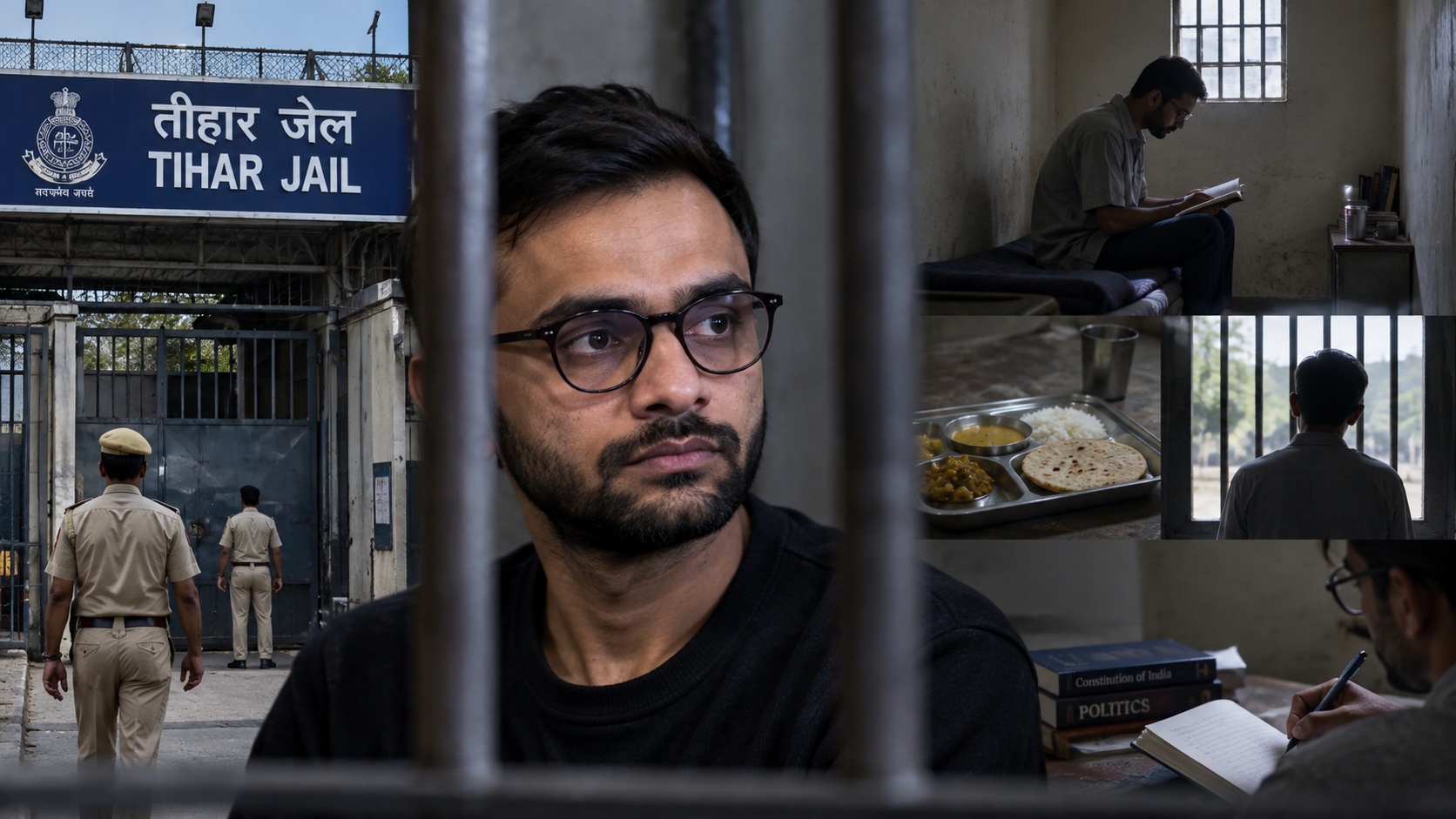
New Delhi: Activist Umar Khalid has described the routine, isolation and emotional challenges of spending six years in Tihar Jail, Delhi, in a letter addressed to his friends and family. An excerpt from the letter, published by The Quint on September 7, offers a detailed account of his daily life behind bars, from the early morning prisoner count to sleepless nights marked by anxiety and physical discomfort.
Khalid begins his day at 6 am with the prison’s morning ginti, or prisoner count. He writes about briefly raising his hand to indicate that he is present before attempting to return to sleep. He also recalls hearing morning prayers from elsewhere in the prison, marking the beginning of another day inside the facility.
Over time, Khalid says he has learned to live alongside lizards and other creatures in his cell. He describes the experience as an adjustment to prison life, where even such creatures can become a form of company.
Prison routine and friendships
Khalid’s account also focuses on the people and animals that have become part of his daily existence. He identifies two prison cats, Shyam Lal and Shilpa, as his best friends during his years in jail.
By around 8 am, prisoners assigned to mushaqqat, or paid prison labour, report to the jail factory. Khalid observes that much of the work required to keep the prison functioning is carried out by inmates. He describes Tihar as a small world within a larger city, where prisoners live under restrictions and cannot move freely according to their wishes.
Limited phone calls and isolation
Khalid writes that inmates are locked inside their cells around noon, followed by another prisoner count. After lunch, he prepares notes for his conversations with friends and family, as he is permitted only three five-minute phone calls each week.
He says that, before his arrest, he had not fully appreciated the value of time spent speaking with loved ones. The short duration of the calls, he argues, makes it difficult to communicate his feelings and thoughts and can deepen a prisoner’s sense of isolation.
At 3 pm, prisoners are allowed out for tea. During this time, Khalid listens to the stories of fellow inmates and the circumstances that brought them to prison. He later takes an evening walk, observing the different routines of prisoners, including those exercising with sand-filled water bottles, praying, discussing life sentences and collecting fruit from trees.
Time marked by seasons
By 5 pm, the warder conducts another round and calls out the prisoners’ names. Khalid describes how the repetitive nature of prison life causes days to merge into one another, making it difficult to grasp the passage of time.
He says that he initially measured time through the books he read and the dates of court hearings. After years in prison, however, he began to notice the changing seasons as a way of marking the passage of time. He also reflects on the physical and psychological pressures of living in a prison cell, particularly during the summer months.
Anxiety and difficult nights
Khalid’s letter describes the anxiety he experiences at night. He says he reads while listening to the radio, with memories of his life continuing to occupy his thoughts. Although he sometimes finds a sense of peace before falling asleep, extreme heat can wake him and leave him struggling with breathlessness.
He explains that the sensation of difficulty breathing can trigger panic and force him to focus consciously on the act of breathing. He also writes that, in prison, he has had to develop an understanding of his own physical symptoms and ways to manage them.
According to his account, the combination of physical distress, anxiety and memories of his years in captivity can leave him feeling overwhelmed. On one occasion, after being unable to find his anxiety medication, he attempts to return to sleep. Just as he begins to drift off, a warder wakes him for the next prisoner count.
Arrest and legal proceedings
Khalid, a former student activist at Jawaharlal Nehru University, was arrested in connection with the 2020 northeast Delhi riots and the protests against the Citizenship Amendment Act and the proposed National Register of Citizens.
He and fellow activist Sharjeel Imam have been accused by police of playing a central role in the alleged conspiracy behind the riots. Both face charges under the Unlawful Activities (Prevention) Act (UAPA).
The legal proceedings have continued for years, with repeated bail applications. On January 5, 2026, the Supreme Court reportedly held that a prima facie case existed against Khalid and Imam under the UAPA and declined to grant them bail.
Khalid’s letter presents a personal account of the effects of prolonged incarceration, including the loss of a normal sense of time, restricted communication with loved ones and the psychological strain of life in prison.