Bengaluru: A forecast Super El Niño could contribute to an estimated 15,800 additional heat-related deaths in India between September 2026 and February 2027, according to a report by the University of Chicago’s Climate Impact Lab. The report projects approximately 451,000 additional heat-related deaths worldwide during the first six months of the anticipated event.
The projections have raised concerns among climate researchers and public health experts, who say governments should strengthen heat preparedness, improve health surveillance and introduce stronger protections for people exposed to high temperatures.
The estimates are projections rather than confirmed deaths, and the report has not yet undergone peer review.
Super El Niño Raises Global Heat Concerns
El Niño is a climate phenomenon associated with warmer-than-average sea surface temperatures in the central and eastern equatorial Pacific Ocean. It can influence weather patterns across the world, affecting temperatures, rainfall and the likelihood of certain extreme weather events.
According to the Climate Impact Lab report published on September 23, 2026, the anticipated strong El Niño could intensify heat-related health risks in several regions over the coming months.
The researchers used earlier studies examining the relationship between temperature and excess mortality, accounting for differences in local climates, population vulnerability and the capacity to adapt to heat. They applied this research to forecast temperature anomalies to estimate potential additional deaths compared with the 1996–2025 average.
The report describes the projected conditions as an indication of the growing risks associated with extreme heat and climate change. However, the estimates depend on forecast conditions and modelling assumptions.
India Could Record 15,800 Additional Deaths
India is projected to be among the countries most affected by the anticipated heat event. The report estimates approximately 15,800 additional heat-related deaths nationwide between September 2026 and February 2027.
Nearly 7,400 of these projected deaths could occur between December and February, according to the report.
Maharashtra is projected to face around 2,600 additional deaths. Other state-level estimates include approximately 1,900 in Karnataka, 1,700 each in Andhra Pradesh and Kerala, 1,600 in Tamil Nadu, 1,500 in West Bengal, 1,100 in Telangana and 1,000 in Odisha.
These figures are model-based estimates, not confirmed forecasts of actual deaths. The eventual impact would depend on weather conditions, local exposure, public health preparedness and the effectiveness of protective measures.
Global South Faces Higher Projected Risks
The report indicates that the projected heat-related mortality burden would be concentrated largely in countries across the Global South.
In Africa’s Sahel region, the study estimates approximately 66,800 additional deaths, including around 31,400 in Nigeria and 17,500 in Sudan. Niger and Chad are projected to record about 10,000 and 8,000 additional deaths, respectively.
In Southeast Asia, the report projects approximately 19,400 additional deaths across the Philippines, Vietnam, Thailand and Cambodia, alongside an estimated 19,300 in Indonesia. Brazil is projected to face around 13,300 additional heat-related deaths.
These estimates illustrate the potential health consequences of extreme heat, particularly in places where large populations face high temperatures and access to cooling or healthcare may be limited.
Experts Call for Stronger Heat Preparedness in India
Apekshita Varshney, executive director of HeatWatch, told The Wire that India should treat the projected figures as an important indication of the possible scale of the risk.
She highlighted gaps in the recording and reporting of heat-related illness and mortality. Heat can worsen existing cardiac, respiratory and kidney conditions, meaning deaths linked to high temperatures may not always be officially recorded as heat-related.
Improving death certification, hospital reporting and coordination between district and state surveillance systems would help authorities better understand the impact of extreme heat, she said.
Varshney also called for extreme heat to be treated as a public health emergency and an occupational safety concern.
Outdoor Workers Among the Most Vulnerable
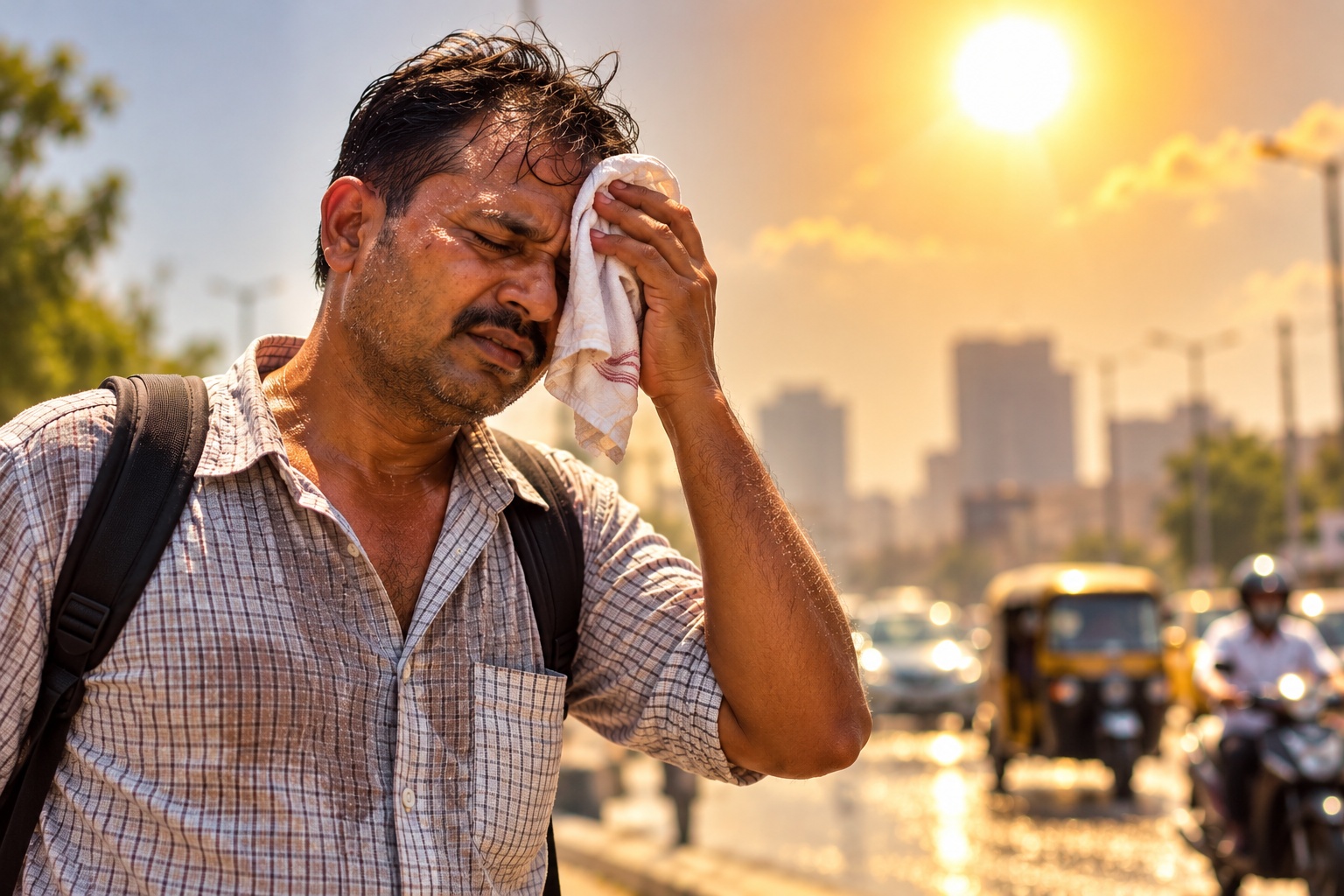
Construction workers, agricultural labourers, street vendors, waste pickers, delivery workers and domestic workers can face prolonged exposure to high temperatures. Many have limited control over their working hours and may be unable to stop working without losing income.
Experts say heat responses should go beyond issuing weather alerts. Suggested measures include paid rest breaks, access to shade and drinking water, first-aid support, flexible working hours and mandatory work stoppages or rescheduling during dangerous conditions.
They have also called for safeguards against wage penalties when extreme heat makes work unsafe, alongside stronger inspections to ensure employers and contractors follow safety requirements.
Cooling Facilities and Healthcare Preparedness Needed
Other recommended measures include accessible cooling centres, reliable water and electricity supplies, targeted support for low-income communities and better-equipped local health systems.
Authorities can also strengthen early-warning systems and public awareness campaigns while ensuring that hospitals and health workers are prepared to identify and treat heat-related illness.
Although the scale of the projected mortality remains uncertain, the report has renewed calls for governments to prepare for extreme temperatures through coordinated public health planning, workplace protections and improved monitoring.
Experts say early preventive action could help reduce the health risks if the forecast conditions materialise.